The Ultimate Capital Allocation: Consciousness Migration
\n\n
The most significant constraint on human potential is not capital, technology, or market share—it is biological hardware. Every strategic decision, every moment of high-performance execution, and every innovation in leadership is tethered to the fragility of a carbon-based substrate. We optimize systems, refine strategy, and integrate AI to extend our reach, yet we remain imprisoned by the limitations of the human brain. Consciousness migration—the theoretical transfer of mental patterns from biological tissue to synthetic substrates—represents the final frontier of operational continuity.
\n\n
For the modern executive or visionary, this is not science fiction; it is the logical extension of the drive for immortality and infinite scale. If an organization’s greatest asset is the institutional knowledge and cognitive architecture of its leaders, then the loss of that consciousness upon death is the ultimate failure of succession planning.
\n\n
The Strategic Imperative of Non-Biological Continuity
\n\n
In business, we value the preservation of intellectual property and the continuity of vision. We build durable corporate structures to outlive their founders. However, the most critical node in any system remains the human mind. If we consider consciousness as a data-rich, patterned architecture, then the biological brain is merely the current server.
\n\n
From a decision-making perspective, the migration of consciousness offers the possibility of removing the decay factor from long-term planning. Current strategic cycles are limited by the human lifespan. A leader who can bypass the cognitive decline associated with aging can maintain a consistent, compounding trajectory of growth that spans decades or centuries rather than quarters. This is the transition from finite-game thinking to infinite-game mastery.
\n\n
The Architecture of Cognitive Portability
\n\n
To understand the feasibility of migration, we must view the brain as a highly complex, interconnected network of information. The challenge is not just the storage of data, but the preservation of the ‘process’—the way consciousness synthesizes information to form a judgment. This is where operational excellence becomes a prerequisite for transhumanism.
\n\n
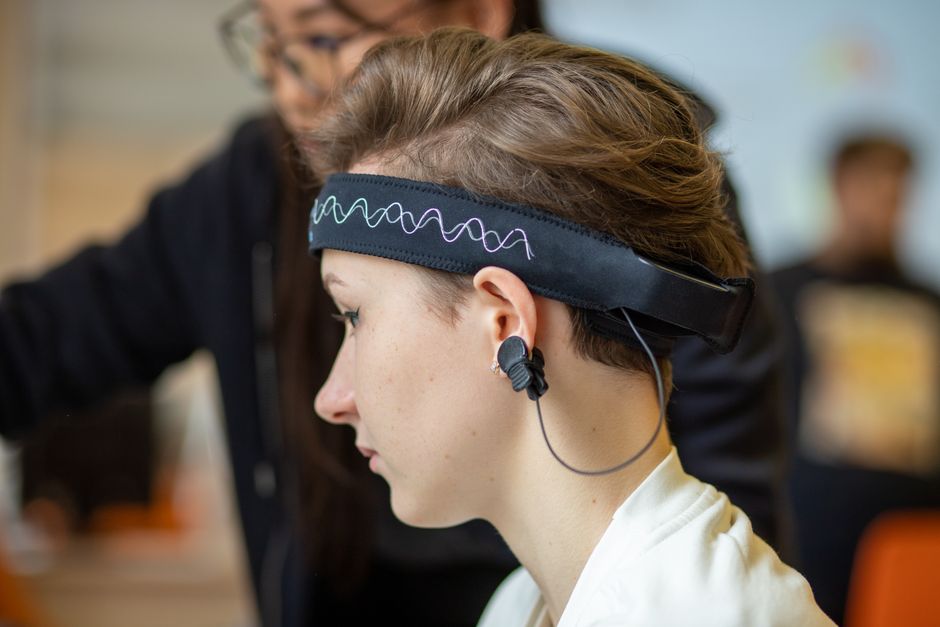
We are currently witnessing the early stages of this migration through the augmentation of cognition. By offloading memory to digital devices and utilizing machine learning to process patterns we cannot see, we are already creating ‘extended’ versions of ourselves. Migration is simply the act of removing the biological dependency entirely. The hurdle is not just high-speed computing, but the replication of the ‘self’—the subjective observer that makes the final call in the boardroom.
\n\n
Operational Risks and the Ethics of Persistence
\n\n
Any transition of this magnitude introduces catastrophic risk. If a consciousness is migrated, does it retain the same risk appetite? Does it maintain the same ethical framework? A leader who is no longer subject to the physical feedback loops of hunger, fatigue, or mortality may drift toward cold, hyper-rational strategies that ignore the human element of organizational culture.
\n\n
Furthermore, the security of a digital consciousness becomes the paramount concern. In a world where data can be intercepted or corrupted, the ‘mind’ of a leader becomes a target for unprecedented cyber-warfare. The execution of such a transition requires an infrastructure of security that currently does not exist. We must prepare for a future where ‘identity theft’ takes on a literal, existential meaning.
\n\n
The Future of High-Performance Thinking
\n\n
We are currently in the ‘early adopter’ phase of cognitive evolution. While full-scale consciousness migration remains theoretical, the principles of modularizing our thought processes and digitizing our expertise are actionable today. By treating our own mental models as code that can be refined, documented, and eventually transferred, we gain a competitive advantage in any field.
\n\n
The goal is to move beyond the limitations of the biological interface. Whether through brain-computer interfaces or full-substrate transfer, the objective remains the same: to ensure that the capacity for high-level synthesis and decisive action survives the obsolescence of the body. The leaders who begin thinking in terms of post-biological continuity are the ones who will define the next epoch of human achievement.